Are you an SME employer, a restaurant or hotel owner, or an HR professional in Thailand struggling with the complexities and costs of hiring service workers through traditional brokers? You're not alone. Many businesses face challenges like high agent fees, fraudulent activities, and lengthy recruitment processes. This guide will show you how to navigate the Thai labor market to directly hire the talent you need, saving time and money while ensuring compliance.
Table of Contents
•What is Direct Hiring in Thailand?•Why Avoid Brokers? The Hidden Costs and Risks•The Thai Labor Market: Opportunities for Direct Hiring•Step-by-Step Guide to Direct Hiring Service Workers in Thailand•Leveraging Technology: The Sabai Job Advantage•Best Practices for Compliant and Efficient Recruitment•Conclusion
What is Direct Hiring in Thailand?
Direct hiring in Thailand refers to the process where employers recruit and onboard employees themselves, without the involvement of third-party recruitment agencies or brokers. This approach allows businesses to have full control over the hiring process, from candidate sourcing to final selection, ensuring a direct and transparent relationship with their workforce.
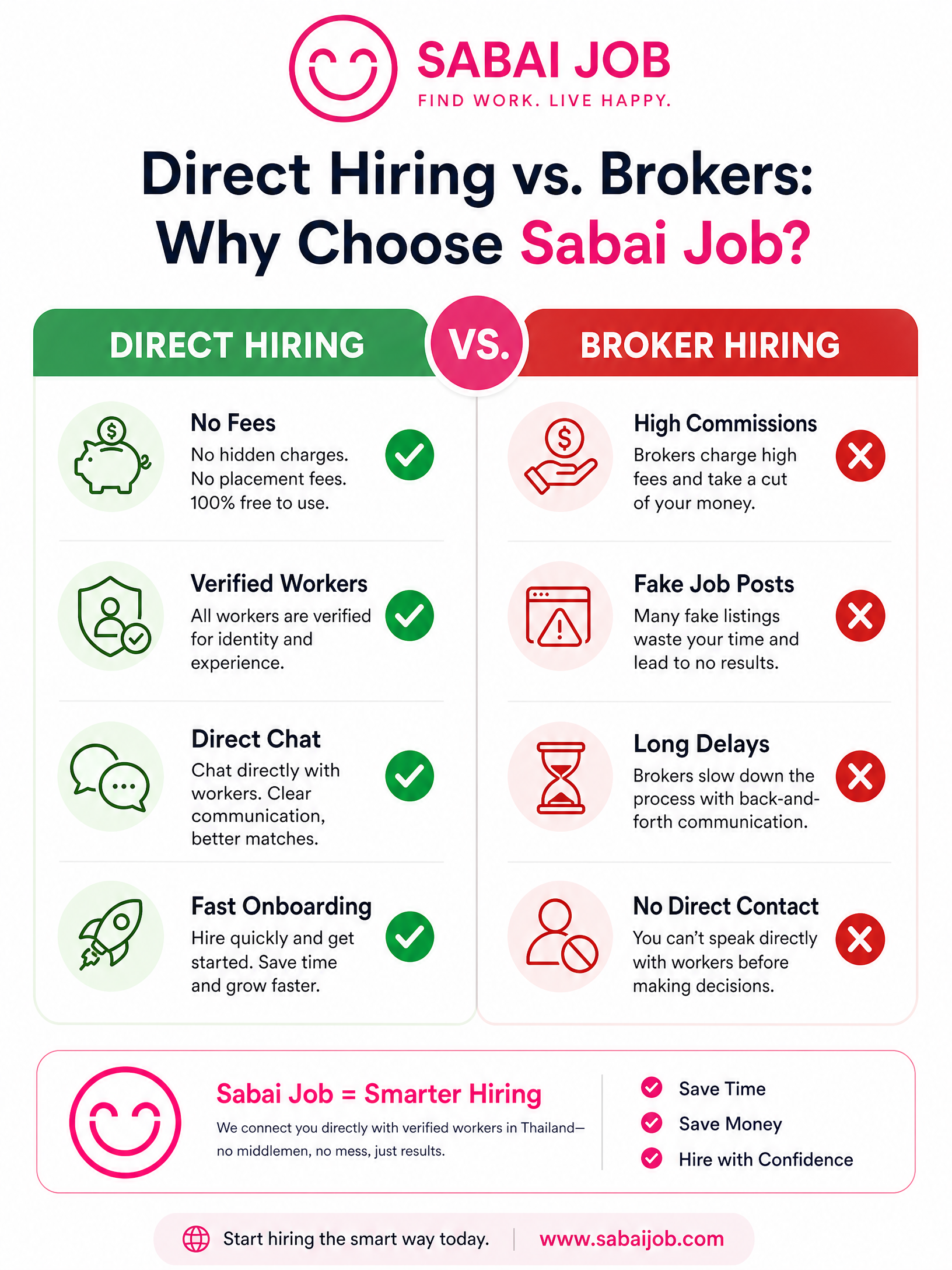
Why Avoid Brokers? The Hidden Costs and Risks
While recruitment brokers have been a traditional route for hiring in Thailand, especially for blue-collar and service workers, they often come with significant drawbacks. For job seekers, this can mean application-related costs averaging 3,000 THB with no guarantee of success, and exposure to fake job posts and fraudulent activities. For employers, the issues are equally pressing:
| Problem | Impact on Employers |
| High Agent Commission Fees | 1,000–5,000 THB per hire, significantly increasing recruitment costs. |
| Difficult to Verify Worker Skills & Documents | Leads to uncertainty about candidate quality and suitability. |
| Candidates Often Do Not Show Up for Interviews | Wastes valuable time and resources, prolonging the hiring cycle. |
| Recruitment Process Takes Around 30 Days | Delays in filling critical roles, impacting business operations. |
| Fraudulent Activities & Fake Job Posts | Risks to company reputation and potential legal issues. |
By bypassing brokers, businesses can mitigate these risks and gain greater control over their recruitment outcomes.
The Thai Labor Market: Opportunities for Direct Hiring
Thailand's labor market presents a vast opportunity for direct hiring, particularly within the service sector. With a total employed population of 39.9 million, approximately 20 million workers are in the service sector, including hospitality, tourism, food & beverage, retail, and maintenance services. This large pool of talent, combined with a significant number of SMEs (700,000+ restaurants and 16,500+ hotels), highlights the need for efficient, direct recruitment solutions.Major target cities like Bangkok, Chiang Mai, Phuket, and Pattaya are hubs for these industries, where the demand for service workers is consistently high. The market currently lacks a dominant mobile-first hiring platform specifically designed for this segment, creating a significant gap that direct hiring platforms can fill.
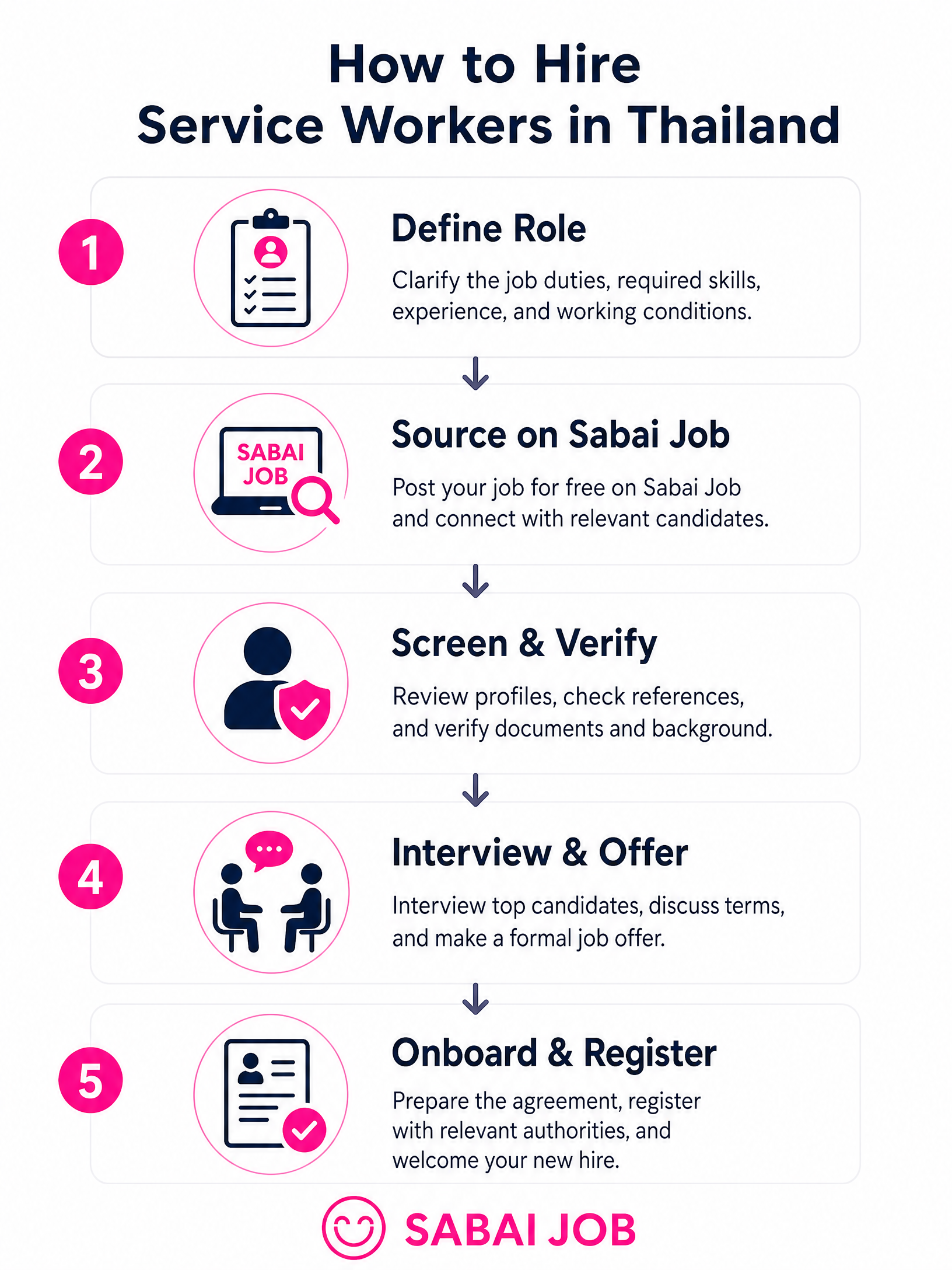
Step-by-Step Guide to Direct Hiring Service Workers in Thailand
Directly hiring workers in Thailand, especially foreign employees, requires adherence to specific legal frameworks. Here’s a simplified guide:
Step 1: Understand Legal Requirements and Compliance
Before initiating any recruitment, ensure your company complies with Thai labor laws. Key aspects include:•Company Registration: Your company must be legally registered in Thailand with the Department of Business Development (DBD) and comply with tax and social security regulations.•Thai-to-Foreign Employee Ratio: For most businesses, a minimum ratio of 4 Thai employees for every 1 foreign worker is required to sponsor work permits. This is also supported by Aniday's employer guide.•Registered Capital: A minimum registered capital of 2 million THB per foreign employee is generally required, as also noted by Aniday.•Social Security Office (SSO) Registration: Register your company with the SSO if not already done.
Step 2: Define the Role and Recruitment Requirements
Clearly outline the job description, required skills, experience, and working conditions. For foreign workers, verify the proposed role against the list of occupations reserved for Thai nationals by the Department of Employment.
Step 3: Source Candidates Directly
Instead of brokers, leverage direct channels:•Online Job Platforms: Utilize specialized job boards that cater to service workers. Platforms like Sabai Job are designed to connect employers directly with verified blue-collar talent.•Vocational Schools & Language Centers: Partner with educational institutions that train service workers. Sabai Job, for instance, has partnerships with language and vocational schools to acquire job seekers.•Worker Communities: Engage with local worker communities, including migrant worker groups, to tap into established networks.
Step 4: Candidate Screening and Verification
This is a critical step to ensure you hire qualified and legitimate workers. Implement a robust screening process that includes:•Identity and Document Verification: Confirm the authenticity of IDs, educational certificates, and other relevant documents.•Skills Assessment: Conduct practical tests or structured interviews to verify stated skills.•Background Checks: Where permissible, conduct background checks to ensure worker reliability.Platforms like Sabai Job offer pre-verified candidates, streamlining this process significantly by verifying identity, documents, and skills upfront.
Step 5: Interview and Offer
Conduct interviews to assess cultural fit and further evaluate skills. Once a suitable candidate is identified, issue a clear offer letter and employment contract. For foreign hires, ensure they hold a valid Non-Immigrant B visa before proceeding with the work permit application.
Step 6: Work Permit Application (for Foreign Workers)
The work permit application is filed with the Department of Employment (DOE). The process typically involves:•Documentation: Prepare comprehensive employer and employee documentation, including company affidavits, financial statements, passport copies, academic qualifications, and health certificates.•e-Work Permit System: As of October 2025, Thailand has mandated the use of the e-Work Permit platform for foreign worker registrations and work permit applications. While initial technical issues led to temporary manual submission options, the system aims to reduce paperwork and speed up approvals. Employers must register and verify their identity via the ThaiID mobile application to access the system.•Processing Time: Typically 7 to 10 business days for straightforward applications, but can take 4-8 weeks for foreign hires including visa processing.Important: Foreign employees cannot begin work before their work permit is physically issued. Working on an expired permit, even briefly, constitutes a criminal offense under Thai law for both employer and employee, as highlighted by Issa Compass.
Leveraging Technology: The Sabai Job Advantage
Sabai Job is specifically designed to empower SMEs to hire directly and efficiently. It addresses many of the pain points associated with traditional recruitment methods:•Mobile-First Experience: Tailored for the convenience of SME owners and HR professionals who prefer mobile solutions.•Large Talent Pool: Access to 25,000+ active job seekers, primarily in Food & Beverage and Hospitality.•Pre-Verified Candidates: Sabai Job verifies identity, documents, and skills, increasing employer confidence and reducing screening time.•AI-Powered Recruitment: Features like AI candidate screening, application tracking, built-in communication, and recruitment workflow management streamline the entire process.•Trust and Transparency: Platform features like ratings, reviews, and recommendations help both employers and workers build credibility.•Faster Hiring: Aims to reduce hiring time from 2–4 weeks to under 48 hours.By using platforms like Sabai Job, businesses can significantly cut down on recruitment costs and time, while ensuring they connect with legitimate and qualified workers.
Best Practices for Compliant and Efficient Recruitment
To maximize your direct hiring success and maintain compliance:•Stay Updated on Labor Laws: Thai labor laws, especially regarding foreign workers, can change. Regularly check official sources like the Department of Employment website.•Maintain Accurate Records: Keep meticulous records of all recruitment processes, employee documents, and work permit applications.•Foster Direct Communication: Utilize in-platform communication tools to interact directly with candidates, schedule interviews, and clarify expectations.•Invest in Employee Retention: Once hired, focus on creating a positive work environment to retain your valuable employees, reducing future recruitment needs.•Utilize Digital Tools: Embrace digital platforms and tools that offer features like AI screening and application tracking to enhance efficiency.Pro Tip: For foreign workers, ensure their Non-Immigrant B visa and work permit are always valid. Working on an expired permit is a criminal offense for both employer and employee.
Conclusion
Hiring workers in Thailand without a broker is not only possible but also increasingly advantageous for SMEs. By understanding the legal landscape, leveraging direct sourcing channels, and utilizing innovative platforms like Sabai Job, businesses can achieve faster, more transparent, and cost-effective recruitment. This approach not only saves money but also builds a more reliable and direct relationship with your workforce, contributing to a safer, more efficient, and more joyful job market for service workers in Thailand.
References
•Sabai Job Knowledge Base - Internal company documentation and platform statistics.•Issa Compass: How to Legally Hire Foreign Employees in Thailand: A Step-by-Step Guide for Businesses in 2026 - Detailed guide on visa and work permit compliance.•Aniday: How to Hire in Thailand: Complete Employer Guide (2026) - Comprehensive overview of employment laws and costs.•Atlas HXM: Thailand Work Permit Submission Procedures: What Employers Need to Know - Information on the new e-Work Permit system and procedures.

-3.png?width=600&height=375&name=Bangkok%E2%80%99s%20Job%20Market%20At%20A%20Glance%20(1)-3.png)